
Smithfield Orthodontic Emergency Care

When an Accident Happens, Count on Us

We’ve been seeing patients through orthodontic treatment for decades, and it’s rarely if ever the case that anyone would make it through the entire process without an accident or mishap occurring. Whether a bracket falls off or you accidentally lose a set of aligners, all you need to do is give us a call. We’ll get you in as soon as possible to find a solution, ease your discomfort, and get you back on track with your treatment.

Why Choose Smithfield Orthodontics for Orthodontic Emergency Care?

  • Compassionate & Experienced Orthodontist
  • State-of-the-Art Technology for Your Comfort
  • We Accept Insurance & Offer Payment Plans

How We Treat Orthodontic Emergencies
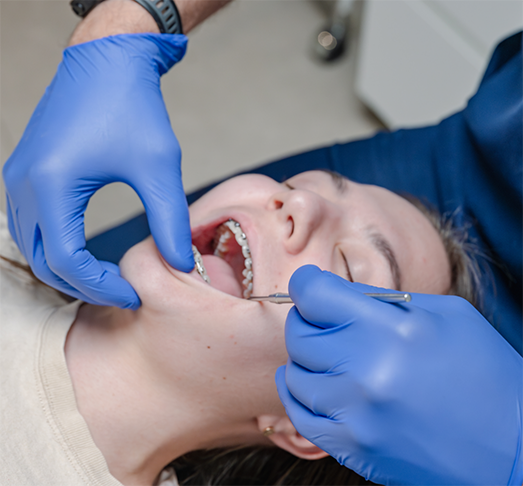
  • Call Our Office: The first step you should take if you find yourself in the midst of dealing with an orthodontic emergency is to call our office. We’ll schedule a visit for you as soon as possible.
  • Come in for an Exam: When you arrive at our practice, you’ll be greeted by Dr. Berry and our team and receive a thorough examination of your orthodontic appliance and mouth.
  • Receive Treatment: Once we’ve determined what the issue is following your exam, we will present you with your treatment options and answer any questions you may have. In some cases, we may be able to fix the situation right away. However, in others, we may need to schedule a separate appointment.

The Most Common Orthodontic Emergencies

When you’re undergoing orthodontic treatment, accidents can happen. The most important rule to remember is to not panic and give us a call! Below, we’ve listed some of the most common emergencies we see for patients undergoing braces or clear aligner treatments, but even if you don’t see what’s impacting you, we encourage you to still give us a call.

Toothaches

Is a toothache an emergency?

Unfortunately, some degree of dental pain is normal during any type of orthodontic treatment. It is quite common to feel mouth-wide aching and soreness when biting down. This can last a few days after initially getting new braces or aligners, or having wires tightened or advancing to your next set of trays.

However, sometimes a toothache can be unrelated to your orthodontic treatment. If you notice your tooth is becoming discolored, causes a sharp pain when you bite down, or if there is lingering sensitivity, it is considered a dental emergency.

How you should handle toothaches:

If your tooth pain doesn’t go away within several days, call Serenity Orthodontics for an urgent appointment. We will ensure that you are seen as soon as possible so we can determine what’s causing your tooth pain. In some cases, we may instruct you to contact your dentist for an emergency visit.

In the meantime, take an over-the-counter pain reliever, apply an icepack, and stick to cold foods and beverages to ease swelling and discomfort. To keep your tooth clean, rinse your mouth with salt water, which will kill any bacteria lingering from infection. You can also floss your teeth to dislodge debris.

Loose Bracket

Is a loose bracket or wire an emergency?

If your loose bracket or wire is not causing you any pain, it is not considered a dental emergency and does not need urgent care. However, it still does need to be fixed as soon as possible so your orthodontic treatment stays on track, so be sure to call us as soon as possible for an appointment.

How you should handle a loose bracket or wire:

If the bracket or wire falls completely off, do your best to locate it and bring it along with you to your appointment. If it is still somewhat in place, you can attempt to stabilize it with orthodontic wax. In most cases, once you arrive at your visit, we can easily reattach it and send you on your way!

Broken Wire

Is a broken bracket or wire an emergency?

A broken bracket or wire may require more urgent attention than a loose wire or bracket because it could pose a risk to your soft tissues. If this type of problem occurs, do not attempt to fix it yourself. Call Serenity Orthodontics as soon as possible for further assistance.

How you should handle a broken bracket or wire:

Locate any pieces that may have broken off and bring them with you to your appointment. Be sure to protect your soft tissues by covering sharp spots with dental wax or even sugarless gum.

Poking Wire

If a wire is poking the cheeks or lips, covering it with dental wax can provide quick initial relief. For wires that are intact but just causing discomfort, a patient should attend an appointment at their earliest convenience. But, if the wire has been broken or knocked out of position, then it’s best to come see us as soon as possible.

Mouth Sores

It’s fairly common for the lips and cheeks to develop minor sores after getting braces as the brackets and wires rub against the soft tissues of the mouth. Eventually the mouth will adapt, creating thicker, stronger tissue where it’s needed, but placing dental wax on trouble spots can help make things easier while this is happening.

Broken Ligature

A ligature is another term for the rubber bands that hold the wire in place on the brackets. They can be broken or dislodged due to any number of situations, such as trying to eat sticky or hard foods. One broken ligature is not a cause for concern, but if several are damaged or missing, then it’s time to schedule an immediate appointment with us.

Soft Tissue Cuts

An unexpected impact to the mouth can lead to braces accidentally cutting the inside of the lips and cheeks. Applying pressure with gauze or a tissue should help control any bleeding, but if it doesn’t slow down after 10-15 minutes, then a patient should go to the emergency room. Thankfully, this situation can largely be prevented by having a patient wear a mouthguard that is specifically designed to go over orthodontics while playing sports.

Something Stuck Between the Teeth

Should food get stuck in the teeth and braces, trying to rinse or floss it out is the best first course of action. Patients only need to come see us if they can’t remove the offending object this way. We strongly recommend NOT using sharp items like scissors or a knife as this can accidentally injure the patient and/or damage their appliance.

Broken or Lost Retainer

The best way to prevent a lost retainer is to make sure it only goes two places—the mouth or its specific container. Life happens, however, and you should give us a call if a retainer goes missing or is broken. It’s important to replace relatively quickly as not using it regularly can allow the teeth to start shifting back to their starting positions. Once you give up searching, reach out to our team.

Loose Teeth

The teeth might feel a little loose after receiving braces or having them adjusted, and this is fine! It’s just a sign that the treatment is doing exactly what it needs to—shifting the teeth. However, if the teeth become noticeably looser, experience pain, and never seem to stabilize, then it’s time to schedule an appointment with us right away.